AIRCRAFT


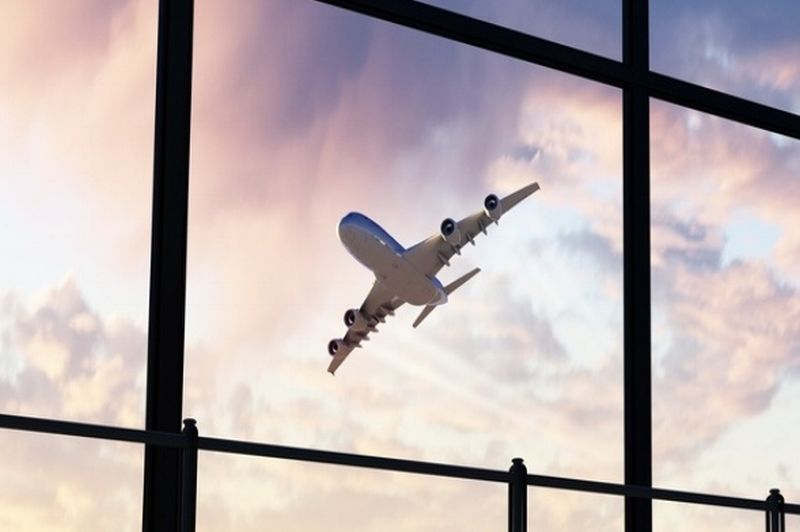
An Airbus A380, the world's largest passenger airliner

An 'aircraft' is a vehicle which is able to fly through the air (or through any other atmosphere). All the human activity which surrounds aircraft is called 'aviation'. (Most rocket vehicles are ''not'' aircraft because they are not supported by the surrounding air).

Contents
Different kinds of aircraft
Lighter than air — aerostats
Heavier than air — aerodynes
Aeroplanes
Rotorcraft
Other methods of lift
Propulsion
Unpowered
Propeller driven
Jet engines
Other forms of propulsion
Classification by use
Military aircraft
Civil aircraft
Commercial aircraft
General aviation
Experimental aircraft
Model aircraft
Historical periods
Manufacturers and types
Environmental effects
See also
Lists
Topics
References
External links

Different kinds of aircraft


Aircraft fall into two broad categories: Lighter-than-air, called 'aerostats', and heavier-than-air, called 'aerodynes'.
Lighter than air — aerostats

A hot air balloon in flight.

Aerostats use buoyancy to float in the air in much the same manner as ships float on the water. They are characterized by one or more large gasbags or canopies, filled with a relatively low density gas such as helium, hydrogen or hot air, which is lighter than the surrounding air. When the weight of this is added to the weight of the aircraft structure, it adds up to the same weight of the air that the craft displaces.
Aerostats may in turn be divided into 'balloons' and 'airships'.
Originally a "balloon" was any aerostat, while the term "airship" was used for large powered aircraft — usually fixed-wing.
The advent first of powered balloons, called dirigible balloons, and later of rigid hulls allowing a vast increase in size, began to confuse things. Huge powered aerostats, characterized by a rigid outer framework and separate aerodynamic skin surrounding the gas bags, dominated the skies. There were no aeroplanes or non-rigid balloons large enough to be called airships, and "airship" came to be synonymous with these great monsters, the Zeppelins being the largest and most famous. Several accidents, such as the Hindenburg fire at Lakehurst, NJ, in 1937 led to the demise of large rigid airships due to safety fears. Nowadays our large and impressive aircraft are aeroplanes rather than rigid aerostats, and we are no longer so impressed by size; we say that a 'balloon' is an unpowered aerostat, whilst an 'airship' is a powered one.
A powered, steerable aerostat is called a 'dirigible'. Sometimes this term is applied only to non-rigid balloons, and sometimes ''dirigible balloon'' is regarded as the definition of an airship (which may then be rigid or non-rigid). Non-rigid dirigibles are characterized by a moderately aerodynamic gasbag with stabilizing fins at the back. These soon became known as 'blimps'. During the Second World War, this shape was widely adopted for tethered balloons, both to reduce the strain on the tether and to stabilize the balloon in rough weather. The nickname ''blimp'' was adopted along with the shape. In modern times we tend to call any small dirigible or airship a blimp, while it is often forgotten that a blimp may be unpowered as well as powered.
Heavier than air — aerodynes

Heavier-than-air aircraft must find some way to push air or gas downwards, so that a reaction occurs (by Newton's laws of motion) to push the aircraft upwards. This dynamic movement through the air is the origin of the term 'aerodyne'. There are two ways to produce dynamic upthrust: 'aerodynamic lift', and 'powered lift' in the form of engine thrust.
Aerodynamic lift is the most common, with 'aeroplanes' kept in the air by the forward movement of wings, and 'rotorcraft' by spinning wing-shaped rotors. A wing is a flat, horizontal surface, usually shaped in cross-section as an aerofoil. To fly it must move forwards through the air; this movement of air over the aerofoil shape deflects air downward to create an equal and opposite upward force, called lift, according to Newton's third law of motion.
With powered lift, the aircraft directs its engine thrust vertically downwards. A pure rocket is not usually regarded as an aerodyne, because it does not depend on the air for its lift (and can even fly into space), however many aerodynamic lift vehicles have been powered or assisted by rocket motors. Rocket-powered missiles which obtain aerodynamic lift at very high speed due to airflow over their bodies, are a marginal case.
The initialism 'VTOL' ('v'ertical 't'ake' o'ff and 'l'anding) is applied to aircraft that can take off and land vertically. Most are rotorcraft. Others, such as the Hawker Siddeley Harrier, take off and land vertically using powered lift and transfer to aerodynamic lift in steady flight. ''STOL'' stands for 's'hort 't'ake 'o'ff and 'l'anding.
Aeroplanes

A size comparison of some of the largest aircraft in the world. The Airbus A380-800 (largest airliner), the Boeing 747-8, the Antonov An-225 (aircraft with the greatest payload) and the Hughes H-4 "Spruce Goose" (aircraft with greatest wingspan).

'Aeroplanes' are fixed-wing aircraft. They generally use some form of propulsion, to provide thrust that moves the craft forward through the air. 'Gliders' are an exception. They have no engine but gain their initial thrust from some launch mechanism, and then gain energy from gravity and thermal currents. For a glider to maintain its forward air speed and lift, it must descend in relation to the air (but not necessarily in relation to the ground). The first practical example of which was designed and built by the British scientist and pioneer George Cayley who is universally recognised as the first aeronautical engineer.
The forerunner of the aeroplane is the 'kite'. Kites depend upon the tension between the cord which anchors it to the ground and the force of the wind currents. Much aerodynamic work was done with kites before test aircraft, wind tunnels and now computer modelling programs became available.
A collection of NASA test aircraft

Aeroplanes are generally characterised by their wing configuration.
In a 'conventional' configuration, the main wings are placed in front of a smaller control surface or tailplane. The 'canard' reverses this, placing a small ''foreplane'' forward of the wings, near the nose of the aircraft. Canards are becoming more common as supersonic aerodynamics grows more mature and because the forward surface contributes lift during straight-and-level flight. The 'tandem wing' type has two wings of equal size, one at the front and one at the back.
Sometimes two or more wings are stacked one above the other. A 'biplane' has two wings, and a 'triplane' has three. The biplane allows a lighter structure than the single-winged 'monoplane'. Up until the 1930's, biplanes were the most common. Triplanes were only occasionally made, especially for a brief period during the First World War due to their high manoeuvrability. Since the Second World War, most aeroplanes have been monoplanes. A 'sesquiplane' is similar to a biplane, but with the lower wing much reduced in size.
Most low-speed aeroplanes have a 'straight wing'. For flight near or above the speed of sound, a 'swept wing' is usually used, where the wing angles backwards towards the tips (though 'forward sweep' is occasionally experimented with). A notable variation is the 'delta' wing, which is shaped like a triangle: the leading edge is sharply swept, but the trailing edge is straight; an especially graceful form this is the double-curved 'ogival delta' found on Concorde. Another variation is the 'crescent wing', seen for example on the Handley Page Victor, which is sharply swept inboard, with reduced sweep for the outboard section.
A 'variable-geometry wing', or ''swing-wing'', can change the angle of sweep in flight. It has been employed in a few examples of combat aircraft, such as the F-111, Panavia Tornado, F-14 Tomcat and B-1 Lancer, among others.
In a 'tail-less' aeroplane the lift and horizontal control surfaces are combined. The ultimate expression of this is the 'flying wing', where there is no central fuselage, and perhaps even no separate vertical control surface (e.g., the B-2 Spirit).
Some people consider wing-in-ground-effect vehicles to be aeroplanes, others do not. These craft "fly" close to the surface of the ground or water. An example is the Russian ekranoplan also nicknamed the "Caspian Sea Monster". Man-powered aircraft also rely on ground effect to remain airborne. (Hovercraft are not considered to be aircraft, since they rely wholly on the pressure of air on the ground beneath, and have no aerodynamic lifting surface).
Rotorcraft


Rotorcraft, or rotary-wing aircraft, use a spinning rotor with aerofoil section blades (a ''rotary wing'') to provide lift. Types include helicopters, autogyros and various hybrids such as gyrodynes and compound rotorcraft.
'Helicopters' have powered rotors. The rotor is driven (directly or indirectly) by an engine and pushes air downwards to create lift. By tilting the rotor forwards, the downwards flow is tilted backwards, producing thrust for forward flight.
'Autogyros' or 'gyroplanes' have unpowered rotors, with a separate power plant to provide thrust. The rotor is tilted backwards. As the autogyro moves forward, air blows upwards through it, making it spin. This spinning dramatically increases the speed of airflow over the rotor, to provide lift. Cierva used the product name ''autogiro'', and Bensen used ''gyrocopter''. 'Rotor kites', such as the Focke Achgelis Fa 330 are unpowered autogyros, which must be towed by a tether to give them forward speed.
'Gyrodynes' are a form of helicopter, where forward thrust is obtained from a separate propulsion device rather than from tilting the rotor. The definition of a 'gyrodyne' has changed over the years, sometimes including equivalent autogyro designs. The most important characteristic is that in forward flight air does not flow significantly either up or down through the rotor disc but primarily across it. The 'Heliplane' is a similar idea.
'Compound rotorcraft' have wings which provide some or all of the lift in forward flight. Compound helicopters and compound autogyros have been built, and some forms of gyroplane may be referred to as compound gyroplanes. 'Tiltrotor' aircraft (such as the V-22 Osprey) have their rotors horizontal for vertical flight, and pivot the rotors vertically like a propeller for forward flight. The 'Coleopter' had a cylindrical wing forming a duct around the rotor. On the ground it sat on its tail, and took off and landed vertically like a helicopter. It would then have tilted forward to fly as a propeller-driven aeroplane using the duct as a wing (though this transition was never achieved in practice.)
Some rotorcraft have reaction-powered rotors with gas jets at the tips but most have one or more lift rotors powered from engine-driven shafts.
Other methods of lift


★ A 'lifting body' is the opposite of a flying wing. In this configuration the aircraft body is shaped to produce lift. If there are any wings, they are too small to provide all the lift. Lifting bodies are not efficient: the aircraft must travel at high speed to generate enough lift to fly. The most famous lifting body design is the Space Shuttle, while some supersonic missiles obtain lift from the airflow over a tubular body.

★ 'Powered lifts' rely entirely on engine thrust to hold them up in the air. There are few practical applications. Experimental designs have been built for personal fan-lift hover platforms and jetpacks or for VTOL research (for example the flying bedstead). VTOL jet aircraft such as the Harrier jump-jet take off and land vertically in powered-lift configuration, then transition to conventional configuration for forward flight.

★ The 'fan wing' is a recent innovation and represents a completely new class of aircraft. This uses a fixed wing with a cylindrical fan mounted spanwise just above. As the fan spins, it creates an airflow backwards over the upper surface of the wing, creating lift. The fan wing is (2005) in development in the United Kingdom.

Propulsion


Unpowered

Some types of aircraft, such as the 'balloon', 'kite' and 'glider', do not have any propulsion. Balloons drift with the wind, though normally the pilot can control the altitude either by heating the air or by releasing ballast, giving some directional control (since the wind direction changes with altitude). For gliders, takeoff takes place from a high location, or the aircraft is pulled into the air by a ground-based winch or vehicle, or towed aloft by a powered "tug" aircraft.
Propeller driven


A propeller comprises a set of small, wing-like aerofoils set around a central hub and aligned in the direction of travel. Spinning the propeller creates aerodynamic lift, or thrust, in a forward direction. A 'contra-prop' arrangement has a second propeller close behind the first one on the same axis, which rotates in the opposite direction.
Some very early attempts were made to make lightweight steam engines capable of powering an aircraft. There is some evidence that (name needed) may have succeeded in making a flying model, but this has never been confirmed.
From the first powered flight by the Wright brothers until World War II, propellers turned by the internal combustion piston engine were virtually the only type of propulsion system in use. (See also: Aircraft engine.) The piston engine is still used in the majority of smaller aircraft produced, since it is efficient at the lower altitudes used by these aircraft, but the radial engine (with the cylinders arranged in a circle around the crankshaft) has largely given way to the horizontally-opposed engine (with the cylinders lined up on two sides of the crankshaft). Water cooled V engines, as used in automobiles, were common in high speed aircraft, until they were replaced by jet and turbine power. Piston engines typically operate using avgas or regular gasoline, though some new ones are being designed to operate on diesel or jet fuel. Piston engines normally become less efficient above 7,000-8,000 ft (2100-2400 m) above sea level because there is less oxygen available for combustion; to solve that problem, some piston engines have mechanically powered compressors (blowers) or turbine-powered turbochargers or turbonormalizers that compress the air before feeding it into the engine; these piston engines can often operate efficiently at 20,000 ft (6100 m) above sea level or higher, altitudes that require the use of supplemental oxygen or cabin pressurization.

Turbine engines need not be used as jets (see below), but may be geared to drive a propeller in the form of a turboprop. Modern helicopters also typically use turbine engines to power the rotor.
Other less common power sources include:

★ Electric motors, often linked to solar panels to create a solar-powered aircraft.

Man powered aircraft use muscle power to drive the propeller.

★ Rubber bands, wound many times to store energy, are mostly used for flying models.
A variation on propellers is to use many broad blades to create a fan. These fans are traditionally surrounded by a ring-shaped fairing or duct, as 'ducted fans'. Some experimental designs do not use a duct, and are sometimes called 'propfans'. How to tell whether it's a propellor or a fan? Look at it from the front when stationary: if you can see in between the blades then it is a propellor, while if the blades pretty much block the view it is a fan.
During the 1940's and especially following the 1973 energy crisis, development work was done on propellers and propfans with swept tips or even curved "scimitar-shaped" blades for use in high-speed commercial and military transports.
Jet engines

Jet engines provide thrust by taking in air, burning it with fuel, and accelerating the exhaust rearwards so that it ejects at high speed. The reaction against this acceleration provides the engine thrust.
Jet engines can provide much higher thrust than propellers, and are naturally efficient at higher altitudes, being able to operate above 40,000 ft (12,000 m). Consequently, nearly all high-speed and high-altitude aircraft use jet engines.
In addition to the original 'turbojet' and later 'turbofan', other types of high-altitude, high-performance jet engines have included the 'pulse jet', 'ramjet', rocket and the still-experimental 'scramjet'.
Other forms of propulsion


Rocket aircraft have occasionally been experimented with, and the Messerschmitt Komet fighter even saw action in the Second World War. Since then, they have been restricted to rather specialised niches, such as in spaceflight where no oxygen is available for combustion (rockets carry their own oxidant). Rockets have more often been used as additional to the main powerplant, most often to assist takeoff of heavily-loaded aircraft, but also in a few experimental designs to provide a high-speed dash capability.

★ The flapping-wing ornithopter is a category of its own. These designs may have potential, but have no major practical applications.

Classification by use


The major distinction in aircraft usage is between military aviation, which includes all uses of aircraft for military purposes (such as combat, patrolling, search and rescue, reconnaissance, transport, and training), and civil aviation, which includes all uses of aircraft for non-military purposes.
Military aircraft

The fifth-generation Military Aircraft, F-22 Raptor

Combat aircraft like fighters or bombers represent only a minority of the category. Many civil aircraft have been produced in separate models for military use, such as the civil Douglas DC-3 airliner, which became the military C-47/C-53/R4D transport in the U.S. military and the "Dakota" in the UK and the Commonwealth. Even the small fabric-covered two-seater Piper J3 Cub had a military version, the L-4 liaison, observation and trainer aircraft. In the past, gliders and balloons have also been used as military aircraft; for example, balloons were used for observation during the American Civil War and World War I, and cargo gliders were used during World War II to land troops.
Combat aircraft themselves, though used a handful of times for reconnaissance and surveillance during the Italo-Turkish War, did not come into widespread use until the Balkan War.
During World War I many types of aircraft were adapted for attacking the ground or enemy vehicles/ships/guns/aircraft, and the first aircraft designed as bombers were born. In order to prevent the enemy from bombing, fighter aircraft were developed to intercept and shoot down enemy aircraft. Tankers were developed after World War II to refuel other aircraft in mid-air, thus increasing their operational range. By the time of the Vietnam War, helicopters had come into widespread military use, especially for transporting, supplying, and supporting ground troops.
Civil aircraft


Civil aviation broadly divides into 'commercial' and 'general' activities, however there can be some overlap in practice.
Commercial aircraft

Commercial aviation includes scheduled and charter airline flights. It also overlaps with a certain amount of general aviation activity where aircraft are offered for hire.
General aviation

General aviation is a catch-all covering other kinds of private and commercial use. The vast majority of flights flown around the world each day belong to the general aviation category, which covers a wide range of activities such as business trips, civilian flight training, recreational balloon flying, firefighting, medical transport (medevac) flights, and cargo transportation on freight aircraft, to name a few. Within general aviation, the major distinction is between private flights (where the pilot is not paid for time or expenses) and commercial flights (where the pilot is paid by a customer or employer). Private pilots use aircraft primarily for personal travel, business travel, or recreation. Usually these private pilots own their own aircraft and take out loans from banks or specialized lenders to purchase them. Commercial general aviation pilots use aircraft for a wide range of tasks, such as flight training, pipeline surveying, passenger and freight transport, policing, crop dusting, and medevac flights. Piston-powered propeller aircraft (single-engine or twin-engine) are especially common for both private and commercial general aviation, but even private pilots occasionally own and operate helicopters like the Bell JetRanger or turboprops like the Beechcraft King Air. Business jets are typically flown by commercial pilots, although there is a new generation of small jets arriving soon for private pilots.
Experimental aircraft

These aircraft are one-off specials, built to explore some aspect of aircraft design and with no other useful purpose.
Model aircraft

A model aircraft is a small copy of some larger aircraft design. Models may be made to fly for fun, for static display, or for serious aerodynamic research (cf Reynolds number).

Historical periods


★ Pioneers of flight

First World War

★ Inter-war years

Second World War

★ Postwar, also called the jet age

Manufacturers and types


Within any general category, aircraft are usually listed according to manufacturer and production type.
:''See also: List of aircraft''

Environmental effects


Aircraft generate considerable amounts of noise pollution and airpollution emissions Since the 1960s the U S Environmental Protection Agency has developed emissions factors for the most commonly used aircraft; in 1972 the Federal Aviation Admonistration developed a computer model for prediction of air pollution concentrationsqs produced by aircraft in flight[1]

See also


Lists


List of aircraft by category

List of aircraft by date and usage category

List of civil aircraft

List of helicopter models

List of military aircraft

List of World War II jet aircraft

List of aircraft engines


List of early flying machines

List of altitude records reached by different aircraft types

List of large aircraft
Topics


Aerial refuelling

Aircraft axis

Aircraft carrier

Aircraft spotting

Airline call signs

Air safety

Air transports of Heads of State

Aviation

Balloon (aircraft)

Contrail

First flying machine

Flight controls

Flight instruments

Flight planning

Future aircraft developments

Gliding

Noise pollution

Personal air vehicle

Roadable Aircraft

Spacecraft

Steam aircraft

Surveillance aircraft

References


1. Hogan, C Michael, Richard Venti and Leda Patmore, Prediction of aircraft generated air pollution contours, ESL Inc, prepared for the U S Federal Aviation Administration 1971

External links


'History'

Smithsonian Air and Space Museum - Excellent online collection with a particular focus on history of aircraft and spacecraft

Virtual Museum

Prehistory of Powered Flight

The Evolution of Modern Aircraft (NASA)

History of Aviation in Australia - State Library of NSW
'Information'

Aircraft-Info.net

Airliners.net

Everything you wanted to know about Aviation — Provided by ''New Scientist''.

Pictures of Aircraft published on Usenet

This article provided by Wikipedia. To edit the contents of this article, click here for original source.

psst.. try this: add to faves