

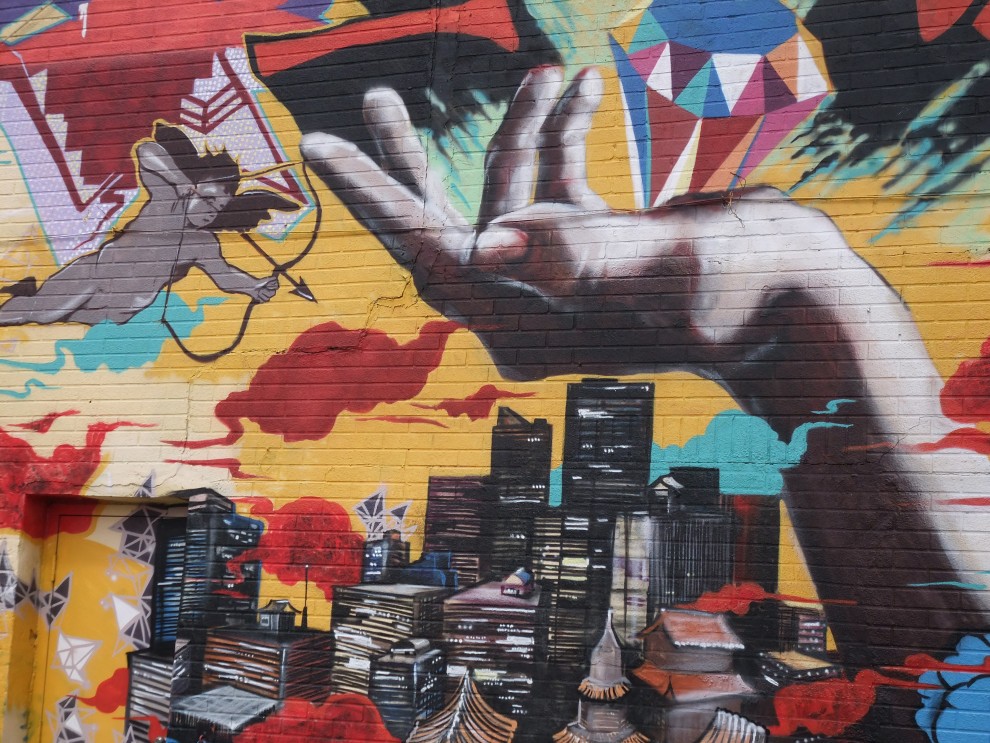
'Culture' (from the
Latin ''cultura'' stemming from ''colere'', meaning "to cultivate,") generally refers to patterns of human activity and the symbolic structures that give such activity significance. Different definitions of "culture" reflect different theoretical bases for understanding, or criteria for evaluating, human activity. In some contexts, a frequent usage of the term ''culture'' is to indicate artifacts in music, literature, painting and sculpture, theater and film.
[1] Although some people identify culture in terms of consumption and consumer goods (as in
high culture,
low culture,
folk culture, or
popular culture)
[2], anthropologists understand "culture" to refer not only to
consumption goods, but to the general processes which produce such goods and give them meaning, and to the social relationships and practices in which such objects and processes become embedded. For them, culture thus includes technology, art, science, as well as moral systems.
Anthropologists most commonly use the term "culture" to refer to the universal human capacity to classify, codify and communicate their experiences
symbolically. This capacity has long been taken as a defining feature of the humans. However,
primatologists have identified aspects of culture among humankind's closest relatives in the animal kingdom.
[3] As a rule,
archaeologists focus on material culture (the material remains of human activity), whereas
social anthropologists focus on social interactions, statuses and institutions, and
cultural anthropologists focus on norms and values. This division of labor reflects the different conditions under which different anthropologists have worked, and the practical need to focus research. It does not necessarily reflect a theory of culture that conceptually distinguishes between the material, the social, and the normative, nor does it reflect three competing theories of culture.

''Farhang'', culture, has always been the focal point of Iranian
civilization. Painting of Persian women musicians from ''
Hasht-Behesht Palace'' ("Palace of the 8 heavens").
Defining "culture"
Culture has been called "the way of life for an entire society." As such, it includes codes of
manners,
dress,
language,
religion,
rituals, norms of behavior such as
law and
morality, and systems of
belief.
[4]
Various definitions of culture reflect differing theories for understanding, or criteria for evaluating, human activity.
Edward Burnett Tylor writing from the perspective of
social anthropology in the
UK in 1871 described culture in the following way: "Culture or
civilization, taken in its wide
ethnographic sense, is that complex whole which includes knowledge, belief, art, morals, law, custom, and any other capabilities and habits acquired by man as a member of society."
[5]
More recently, the United Nations Educational, Scientific and Cultural Organization (
Unesco) (2002) described culture as follows: "... culture should be regarded as the set of distinctive spiritual, material, intellectual and emotional features of society or a social group, and that it encompasses, in addition to
art and
literature,
lifestyles, ways of living together, value systems, traditions and beliefs".
[6]
While these two definitions cover a range of meaning, they do not exhaust the many uses of the term "culture." In 1952,
Alfred Kroeber and
Clyde Kluckhohn compiled a list of 164 definitions of "culture" in ''Culture: A Critical Review of Concepts and Definitions''.
[7]
These definitions, and many others, provide a catalog of the elements of culture. The items cataloged (e.g., a law, a stone tool, a marriage) each have an existence and life-line of their own. They come into space-time at one set of coordinates and go out of it another. While here, they change, so that one may speak of the evolution of the law or the tool.
A culture, then, is by definition at least, a set of cultural objects. Anthropologist
Leslie White asked: "What sort of objects are they? Are they physical objects? Mental objects? Both? Metaphors? Symbols? Reifications?" In ''Science of Culture'' (1949), he concluded that they are objects "''
sui generis''"; that is, of their own kind. In trying to define that kind, he hit upon a previously unrealized aspect of symbolization, which he called "the symbolate"—an object created by the act of symbolization. He thus defined culture as "symbolates understood in an extra-somatic context."
[8] The key to this definition is the discovery of the symbolate.
Seeking to provide a practical definition,
social theorist, Peter Walters, describes culture simply as "shared
schematic experience", including, but not limited to, any of the various qualifiers (linguistic, artistic, religious, etc.) included in previous definitions.
Ways of looking at culture
Culture as civilization
Many people today have an idea of "culture" that developed in Europe during the 18th and early 19th centuries. This notion of culture reflected inequalities within European societies, and between European powers and their colonies around the world. It identifies "culture" with "
civilization" and contrasts it with "
nature." According to this way of thinking, one can classify some countries as more civilized than others, and some people as more cultured than others. Some cultural theorists have thus tried to eliminate popular or mass culture from the definition of culture. Theorists such as
Matthew Arnold (1822-1888) or
the Leavisites regard culture as simply the result of "the best that has been thought and said in the world”
[Arnold, Matthew. 1869. ''Culture and Anarchy.''] Arnold contrasted mass/popular culture with social chaos or anarchy. On this account, culture links closely with social cultivation: the progressive refinement of human behavior. Arnold consistently uses the word this way: "... culture being a pursuit of our total
perfection by means of getting to know, on all the matters which most concern us, the best which has been thought and said in the world".

An artifact of "high culture": a painting by
Edgar Degas.
In practice, ''culture'' referred to
élite activities such as
museum-caliber
art and
classical music, and the word ''cultured'' described people who knew about, and took part in, these activities. These are often called "
high culture", namely the culture of the
ruling social group,
[9] to distinguish them from
mass culture or
popular culture.
From the 19th century onwards, some social
critics have accepted this contrast between the highest and lowest culture, but have stressed the refinement and of sophistication of high culture as corrupting and unnatural developments that obscure and distort people's essential nature. On this account,
folk music (as produced by working-class people) honestly expresses a natural way of life, and classical music seems superficial and decadent. Equally, this view often portrays
Indigenous peoples as '
noble savages' living
authentic unblemished lives, uncomplicated and uncorrupted by the highly-stratified
capitalist systems of
the West.
Today most social scientists reject the
monadic conception of culture, and the opposition of culture to
nature. They recognize non-
élites as just as cultured as élites (and non-Westerners as just as civilized) -- simply regarding them as just cultured in a different way. Thus social observers contrast the ''"high" culture'' of élites to
''"popular" or pop culture'', meaning goods and activities produced for, and consumed by the
masses. (Note that some classifications relegate both
high and
low cultures to the status of
subcultures.)
Culture as worldview
During the
Romantic era, scholars in
Germany, especially those concerned with
nationalist movements — such as the nationalist struggle to create a "Germany" out of diverse principalities, and the nationalist struggles by ethnic minorities against the
Austro-Hungarian Empire — developed a more inclusive notion of culture as "
worldview." In this mode of thought, a distinct and incommensurable world view characterizes each ethnic group. Although more inclusive than earlier views, this approach to culture still allowed for distinctions between "civilized" and "primitive" or "tribal" cultures.
By the late 19th century,
anthropologists had adopted and adapted the term ''culture'' to a broader definition that they could apply to a wider variety of societies. Attentive to the theory of
evolution, they assumed that all human beings evolved equally, and that the fact that all humans have cultures must in some way result from human evolution. They also showed some reluctance to use biological evolution to explain differences between specific cultures — an approach that either exemplified a form of, or segment of society ''vis a vis'' other segments and the society as a whole, they often reveal processes of
domination and
resistance.
In the 1950s,
subcultures — groups with distinctive characteristics within a larger culture — began to be the subject of study by sociologists. The 20th century also saw the popularization of the idea of
corporate culture — distinct and malleable within the context of an employing
organization or a
workplace.
Culture as symbols
The symbolic view of culture, the legacy of Clifford Geertz (1973) and Victor Turner (1967), holds symbols to be both the practices of social actors and the context that gives such practices meaning. Anthony P. Cohen (1985) writes of the "symbolic gloss" which allows social actors to use common symbols to communicate and understand each other while still imbuing these symbols with personal significance and meanings.
[10] Symbols provide the limits of cultured thought. Members of a culture rely on these symbols to frame their thoughts and expressions in intelligible terms. In short, symbols make culture possible, reproducible and readable. They are the "webs of significance" in Weber's sense that, to quote Pierre Bourdieu (1977), "give regularity, unity and systematicity to the practices of a group."
[11] Thus, for example:
★ ''"Stop, in the name of the law!"''—Stock phrase uttered to the
antagonists by the
sheriff or
marshal in 20th century
American Old Western
movies
★ ''Law and order''—stock phrase in the United States
★ ''Peace and order''—
stock phrase in the Philippines
Culture as a stabilizing mechanism
Modern cultural theory also considers the possibility that (a) culture itself is a product of stabilization tendencies inherent in evolutionary pressures toward self-similarity and self-cognition of societies as wholes, or
tribalisms. See
Stephen Wolfram's ''
A new kind of science'' on iterated simple algorithms from genetic unfolding, from which the concept of culture as an operating mechanism can be developed,
[12] and
Richard Dawkins' ''
The Extended Phenotype'' for discussion of genetic and
memetic stability over time, through
negative feedback mechanisms.
[13]
Culture and evolutionary psychology
Researchers in
evolutionary psychology argue that the mind is a system of neurocognitive information processing modules designed by natural selection to solve the adaptive problems of our distant ancestors. According to evolutionary psychologists, the diversity of forms that human cultures take are constrained (indeed, made possible) by innate information processing mechanisms underlying our behavior, including:
★ Language acquisition modules
★ Incest avoidance mechanisms
★ Cheater detection mechanisms
★ Intelligence and sex-specific mating preferences
★ Foraging mechanisms
★ Alliance-tracking mechanisms
★ Agent detection mechanisms
★ Fear and protection mechanisms (survival mechanisms)
These mechanisms are theorized to be the psychological foundations of culture. In order to fully understand culture we must understand its biological conditions of possibility.
Cultures within a society
Large societies often have
subcultures, or groups of people with distinct sets of behavior and
beliefs that differentiate them from a larger culture of which they are a part. The subculture may be distinctive because of the age of its members, or by their
race,
ethnicity,
class or
gender. The qualities that determine a subculture as distinct may be
aesthetic,
religious,
occupational,
political,
sexual or a combination of these factors.
In dealing with immigrant groups and their cultures, there are essentially four approaches:
★
Monoculturalism: In some European states, culture is very closely linked to
nationalism, thus government policy is to assimilate immigrants, although recent increases in migration have led many European states to experiment with forms of multiculturalism.
★
Leitkultur (core culture): A model developed in Germany by
Bassam Tibi. The idea is that minorities can have an identity of their own, but they should at least support the core concepts of the culture on which the society is based.
★
Melting Pot: In the
United States, the traditional view has been one of a melting pot where all the immigrant cultures are mixed and amalgamated without state intervention.
★
Multiculturalism: A policy that immigrants and others should preserve their cultures with the different cultures interacting peacefully within one nation.
The way nation states treat immigrant cultures rarely falls neatly into one or another of the above approaches. The degree of difference with the host culture (i.e., "foreignness"), the number of immigrants, attitudes of the resident population, the type of government policies that are enacted and the effectiveness of those policies all make it difficult to generalize about the effects. Similarly with other subcultures within a society, attitudes of the mainstream population and communications between various cultural groups play a major role in determining outcomes. The study of cultures within a society is complex and research must take into account a myriad of variables.
Cultures by region
Main articles: Culture by region
Many regional cultures have been influenced by contact with others, such as by
colonization,
trade,
migration,
mass media and
religion.
;Africa
Though of many varied origins, African culture, especially Sub-Saharan African culture has been shaped by European colonialism, and, especially in North Africa, by
Arab and
Islamic culture.

Hopi man weaving on traditional loom in the USA.
;Americas
The culture of the
Americas has been strongly influenced by
peoples that inhabitated the continents before Europeans arrived; people from Africa (the United States especially has a large African-American population, most of whom are descended from former slaves), and the immigration of Europeans, especially Spanish, English, French, Portuguese, German, Irish, Italian and Dutch.
;Asia
Despite the great cultural diversity of
Asian nations, there are, nevertheless, several transnational cultural influences. Though
Korea,
Japan, and
Vietnam are not Chinese-speaking countries, their languages have been influenced by Chinese and Chinese writing. Thus, in
East Asia,
Chinese writing is generally agreed to exert a unifying influence. Religions, especially
Buddhism and
Taoism have had an impact on the cultural traditions of East Asian countries (''see'' section on
Eastern religion and philosophy, below). There is also a shared social and moral philosophy that derives from
Confucianism.
Hinduism and
Islam have for hundreds of years exerted cultural influence on various peoples of
South Asia. Similarly, Buddhism is pervasive in
Southeast Asia.
;Pacific
Most of the countries of the
Pacific Ocean continue to be dominated by their
indigenous cultures, although these have generally been affected by contact with European culture. In particular, most of
Polynesia is now strongly
Christian. Other countries, such as
Australia and
New Zealand have been dominated by white settlers and their descendants, whose culture now predominates. However
Indigenous Australian and
Māori (New Zealand) cultures are still present.
;Europe
European culture also has a broad influence beyond the continent of Europe due to the legacy of
colonialism. In this broader sense it is sometimes referred to as ''
Western culture''. This is most easily seen in the spread of the
English language and to a lesser extent, a few other European languages. Dominant influences include
ancient Greece,
ancient Rome, and
Christianity, although religion has declined in Europe.
;Middle East and North Africa
The Middle East generally has three dominant and clear cultures, Arabic, Persian and Turkish, which have influenced each other with varying degrees during different times. The region is predominantly Muslim although significant minorities of Christians and smaller minorities of other religions exist.
Arabic culture has deeply influenced the Persian and Turkish cultures through
Islam; influencing their languages, writing systems, art, architecture and literature as well as in other areas. The proximity of
Iran has influenced the regions closer to it such as
Iraq and
Turkey, traces of language can be found in the Iraqi and
Kuwaiti dialects of Arabic as well as the Turkish language. The 500 years of
Ottoman rule over most of the Middle East has had a heavy influence over the Arabic culture, this may spread as far as Algeria but can be found to a heavier degree in
Egypt,
Iraq and the
Levant.
Belief systems
Religion and other belief systems are often integral to a culture. Religion, from the Latin ''religare,'' meaning "to bind fast", is a feature of cultures throughout human history. The ''Dictionary of Philosophy and Religion'' defines religion in the following way:
... an institution with a recognized body of communicants who gather together regularly for worship, and accept a set of doctrines offering some means of relating the individual to what is taken to be the ultimate nature of reality.[14]
Religion often codifies behavior, such as with the
10 Commandments of
Christianity or the
five precepts of
Buddhism. Sometimes it is involved with government, as in a
theocracy. It also influences arts.
Eurocentric custom to some extent divides humanity into Western and non-Western cultures, although this has some flaws.
Western culture spread from Europe most strongly to Australia, Canada, and the United States. It is influenced by
ancient Greece,
ancient Rome and the
Christian church.
Western culture tends to be more individualistic than non-Western cultures. It also sees man, god, and nature or the universe more separately than non-Western cultures. It is marked by economic wealth, literacy, and technological advancement, although these traits are not exclusive to it.
Abrahamic religions
Judaism is one of the first, recorded
monotheistic faiths and one of the oldest religious
traditions still practiced today. The values and history of the Jewish people are a major part of the foundation of other
Abrahamic religions such as
Christianity,
Islam, as well as the
Bahá'í Faith. However, while sharing a heritage from
Abraham each has distinct arts (visual and performance arts and the like.) Of course some of these are regional influences among the nations the religions are present in, but there are some norms or forms of cultural expression distinctly emphasized by the religions.
Christianity was the dominant feature in shaping European and the New World cultures for at least the last 500 to 1700 years. Modern philosophical thought has very much been influenced by Christian philosophers such as St.
Thomas Aquinas and
Erasmus and Christian
Cathedrals have been noted as architectural wonders like
Notre Dame de Paris,
Wells Cathedral and
Mexico City Metropolitan Cathedral.
Islam's influence has dominated much of the North African, Middle and Far East regions for almost 1500 years, sometimes mixed with other religions. For example Islam's influence can be seen in diverse philosophies such as
Ibn Bajjah,
Ibn Tufail,
Ibn Khaldun and
Averroes as well as poetic stories and litariture like
Hayy ibn Yaqdhan,
The Madman of Layla,
The Conference of the Birds and the
Masnavi in addition to art and architecture such as the
Umayyad Mosque,
Dome of the Rock,
Faisal Mosque,
Hagia Sophia (which has been a Cathedral and a Mosque) and the many styles of
Arabesque.
Judaism and the Baha'i faiths are usually minority religions among the nations but still have made distinctive contributions to the cultures of the nations and regions. Of Judaism, people of note include
Albert Einstein and
Henry Kissinger and musicians/performers like
Paula Abdul,
Sammy Davis, Jr., and
Bob Dylan. Of the Bahá'í faith, consider the
Bahá'í House of Worship as well as musicians like
Dizzy Gillespie and thinkers like
Alain LeRoy Locke,
Frederick Mayer and
Richard St. Barbe Baker.
The mainstream
anthropological view of ‘
culture’ implies that we most people experience a strong resistance when reminded that there is an animal as well as a spiritual aspect to human nature.
[15]
Eastern religion and philosophy
Main articles: Eastern philosophy,
Eastern religion
Philosophy and religion are often closely interwoven in Eastern thought. Many Asian religious and philosophical traditions originated in India and China and spread across Asia through
cultural diffusion and the migration of peoples.
Hinduism is the wellspring of
Buddhism, the
Mahāyāna branch of which spread north and eastwards from India into Tibet, China, Mongolia, Japan and Korea and south from China into Vietnam.
Theravāda Buddhism spread throughout
Southeast Asia, including Sri Lanka, parts of southwest China, Cambodia, Laos, Myanmar, and Thailand.
Indian philosophy includes
Hindu philosophy. They contain elements of nonmaterial pursuits, whereas another school of thought from India,
Carvaka, preached the enjoyment of material world.
Confucianism and
Taoism, both of which originated in China have had pervasive influence on both religious and philosophical traditions, as well as
statecraft and the arts throughout Asia.
During the 20th century, in the two most populous countries of Asia, two dramatically different political philosophies took shape.
Gandhi gave a new meaning to
Ahimsa, a core belief of both Hinduism and
Jainism, and redefined the concepts of
nonviolence and
nonresistance far beyond the confines of India. During the same period,
Mao Zedong’s
communist philosophy became a powerful secular belief system in China.
Folk religions
Folk religions practiced by tribal groups are common in Asia, Africa and the Americas. Their influence can be considerable; may pervade the culture and even become the state religion, as with
Shintoism. Like the other major religions, folk religion answers human needs for reassurance in times of trouble, healing, averting misfortune and providing
rituals that address the major passages and transitions in human life.
The "American Dream"
The
American Dream is a belief, held by many in the United States, that through hard work, courage, and self-determination, regardless of
social class, a person can
gain a better life.
[16] This notion is rooted in the belief that the United States is a "
city upon a hill, a light unto the nations,"
[17] which were values held by many early European settlers and maintained by subsequent generations.
This concept is mirrored in other cultures, such as in the case of ''the Great
Australian Dream,'' although this refers more closely to
home ownership by the same means.
Marriage
Religion often influences
marriage and
sexual practices.
Most
Christian churches give some form of blessing to a marriage; the wedding ceremony typically includes some sort of pledge by the community to support the relationship. In marriage, Christians draw a parallel with the relationship between Jesus Christ and His Church. The
Roman Catholic Church believes it is morally wrong to divorce, and divorcées cannot remarry in a church marriage (without a formal
annulment of the previous marriage).
Cultural studies
Cultural studies developed in the late 20th century, in part through the re-introduction of
Marxist thought into
sociology, and in part through the
articulation of
sociology and other academic disciplines such as
literary criticism. This movement aimed to focus on the analysis of subcultures in
capitalist societies. Following the non-anthropological tradition,
cultural studies generally focus on the study of consumption goods (such as
fashion,
art, and
literature). Because the 18th- and 19th-century distinction between "high" and "low" culture seems inappropriate to apply to the mass-produced and mass-marketed consumption goods which cultural studies analyses, these scholars refer instead to "popular culture".
Today, some
anthropologists have joined the project of cultural studies. Most, however, reject the identification of culture with consumption goods. Furthermore, many now reject the notion of culture as bounded, and consequently reject the notion of
subculture. Instead, they see culture as a complex web of shifting patterns that link people in different locales and that link social formations of different scales. According to this view, any group can construct its own
cultural identity.
Currently, a debate is underway regarding whether or not culture can actually change fundamental
human cognition. Researchers are divided on the question.
Cultural change
Cultures, by
predisposition, both embrace and resist
change, depending on culture traits. For example, men and women have complementary roles in many cultures. One gender might desire changes that affect the other, as happened in the second half of the 20th century in
western cultures. Thus there are both dynamic influences that encourage acceptance of new things, and conservative forces that resist change.
Three kinds of influence cause both change and resistance to it:
#forces at work within a society
#contact between societies
#changes in the natural environment.
[18]
Cultural change can come about due to the environment, to inventions (and other internal influences), and to contact with other cultures. For example, the end of the last
ice age helped lead to the invention of
agriculture, which in its turn brought about many cultural innovations.
In
diffusion, the form of something (though not necessarily its meaning) moves from one culture to another. For example,
hamburgers, mundane in the United States, seemed exotic when introduced into China. "Stimulus diffusion" refers to an element of one culture leading to an invention in another.
Diffusion of innovations theory presents a research-based model of why and when individuals and cultures adopt new ideas, practices, and products.
"
Acculturation" has different meanings, but in this context refers to replacement of the traits of one culture with those of another, such has happened to certain
Native American tribes and to many indigenous peoples across the globe during the process of
colonization. Related processes on an individual level include
assimilation (adoption of a different culture by an individual) and
transculturation.
Cultural invention has come to mean any innovation that is new and found to be useful to a group of people and expressed in their behavior but which does not exist as a physical object. Humanity is in a global "accelerating culture change period", driven by the expansion of international commerce, the mass media, and above all, the
human population explosion, among other factors. The world's population now doubles in less than 40 years.
[O'Neil, D. 2006. "Overview".]
Culture change is complex and has far-ranging effects. Sociologists and anthropologists believe that a
holistic approach to the study of cultures and their environments is needed to understand all of the various aspects of change. Human existence may best be looked at as a "multifaceted whole." Only from this vantage can one grasp the realities of culture change.
Notes
1. Raymond Williams (1976) ''. Rev. Ed. (NewYork: Oxford UP, 1983), pp. 87-93 and 236-8.
2. John Berger, Peter Smith Pub. Inc.,(1971)''Ways of Seeing''
3. Goodall, J. 1986. ''The Chimpanzees of Gombe: Patterns of Behavior.''
4. Jary, D. and J. Jary. 1991. ''The HarperCollins Dictionary of Sociology'', page 101.
5. Tylor, E.B. 1974. ''Primitive culture: researches into the development of mythology, philosophy, religion, art, and custom''.
6. UNESCO. 2002. [1] Universal Declaration on Cultural Diversity.
7. Kroeber, A. L. and C. Kluckhohn, 1952. ''Culture: A Critical Review of Concepts and Definitions.''
8. White, L. 1949. ''The Science of Culture: A study of man and civilization.''
9. Bakhtin 1981, p.4
10. Cohen, A. 1985. ''The Symbolic Construction of Community.''
11. Bourdieu, P. 1977. ''Outline of a Theory of Practice.''
12.
★ Wolfram, S., ''A New Kind of Science''.
13. Dawkins, R. 1982. ''The Extended Phenotype''
14. Reese, W.L. 1980. ''Dictionary of Philosophy and Religion: Eastern and Western Thought,'' page 488.
15. Jonathan Benthall ''Animal liberation and rights'' Anthropology Today Volume 23 Issue 2 Page 1 - April 2007
16. Boritt, Gabor S. ''Lincoln and the Economics of the American Dream,'' p. 1.
17. Ronald Reagan. "Final Radio Address to the Nation".
18. O'Neil, D. 2006. "Processes of Change".
References
★ Ankerl,Guy: ''Coexisting Contemporary Civilizations: Arabo-Muslim, Bharati, Chinese, and Western.'' Geneva: INUPRESS, 2000, ISBN 2881550045
★ Arnold, Matthew. 1869.
''Culture and Anarchy.'' New York: Macmillan. Third edition, 1882, available online. Retrieved: 2006-06-28.
★
Bakhtin, M. M. (1981) ''
The Dialogic Imagination: Four Essays''. Ed. Michael Holquist. Trans. Caryl Press. ISBN 978-0-252-06445-6.
★ Bourdieu, Pierre. 1977. ''Outline of a Theory of Practice.'' Cambridge University Press. ISBN 978-0-521-29164-4
★ Cohen, Anthony P. 1985. ''The Symbolic Construction of Community.'' Routledge: New York,
★ Dawkiins, R. 1982. ''
The Extended Phenotype: The Long Reach of the Gene.'' Paperback ed., 1999. Oxford Paperbacks. ISBN 978-0-19-288051-2
★ Forsberg, A.
Definitions of culture CCSF Cultural Geography course notes. Retrieved: 2006-06-29.
★ Geertz, Clifford. 1973. ''The Interpretation of Cultures: Selected Essays''. New York. ISBN 978-0-465-09719-7.
:— 1957. "Ritual and Social Change: A Javanese Example", ''American Anthropologist'', Vol. 59, No. 1.
★ Goodall, J. 1986. ''The Chimpanzees of Gombe: Patterns of Behavior.'' Cambridge, MA: Belknap Press of Harvard University Press. ISBN 978-0-674-11649-8
★ Hoult, T. F., ed. 1969. ''Dictionary of Modern Sociology''. Totowa, New Jersey, United States: Littlefield, Adams & Co.
★ Jary, D. and J. Jary. 1991. ''The HarperCollins Dictionary of Sociology.'' New York: HarperCollins. ISBN 0-06-271543-7
★ Keiser, R. Lincoln 1969. ''The Vice Lords: Warriors of the Streets''. Holt, Rinehart, and Winston. ISBN 978-0-03-080361-1.
★ Kroeber, A. L. and C. Kluckhohn, 1952. ''Culture: A Critical Review of Concepts and Definitions.'' Cambridge, MA: Peabody Museum
★ Kim, Uichol (2001). "Culture, science and indigenous psychologies: An integrated analysis." In D. Matsumoto (Ed.), ''Handbook of culture and psychology.'' Oxford: Oxford University Press
★ Middleton, R. 1990. ''Studying Popular Music''. Philadelphia: Open University Press. ISBN 978-0-335-15275-9.
★ Rhoads, Kelton. 2006.
''The Culture Variable in the Influence Equation.''
★ Tylor, E.B. 1974. ''Primitive culture: researches into the development of mythology, philosophy, religion, art, and custom.'' New York: Gordon Press. First published in 1871. ISBN 978-0-87968-091-6
★ O'Neil, D. 2006.
Cultural Anthropology Tutorials, Behavioral Sciences Department, Palomar College, San Marco, California. Retrieved: 2006-07-10.
★
Reagan, Ronald.
"Final Radio Address to the Nation",
January 14,
1989. Retrieved
June 3,
2006.
★ Reese, W.L. 1980. ''Dictionary of Philosophy and Religion: Eastern and Western Thought.'' New Jersey U.S., Sussex, U.K: Humanities Press.
★ UNESCO. 2002.
Universal Declaration on Cultural Diversity, issued on
International Mother Language Day,
February 21,
2002. Retrieved: 2006-06-23.
★ White, L. 1949. ''The Science of Culture: A study of man and civilization.'' New York: Farrar, Straus and Giroux.
★ Wilson, Edward O. (1998). ''.'' Vintage: New York. ISBN 978-0-679-76867-8.
★ Wolfram, Stephen. 2002 ''
A New Kind of Science.'' Wolfram Media, Inc. ISBN 978-1-57955-008-0
David es manicero
See also
★
List of basic culture topics
★
Cultural bias -
Cultural imperialism -
Ethnocentrism
★
Counterculture
★
Cross-cultural communication -
Intercultural competence
★
Cultural evolution
★
Culture theory
★
Cultural dissonance
★
Cultural universals
★
Culture war
★
Emotions and Culture
★
Urban culture
External links
★
Detailed article on defining culture
★
''Dictionary of the History of Ideas'': "culture" and "civilization" in modern times
★
Countries and their Cultures
★
Global Culture Essays on globalization, migration and their impact on global culture
★
Centre for Intercultural Learning
★
What is Culture? - Washington State University
★
Investigaciones en Bioética
★
Define Culture - List of definitions of culture from people around the world.
★
Reflections on the Politics of Culture by
Michael Parenti
★
Mukul Dey Archives, Chitralekha, Santiniketan INDIA
★
Foreign Influence on Indian Culture (c. 600 BC to AD 320) by Manjari Ukil